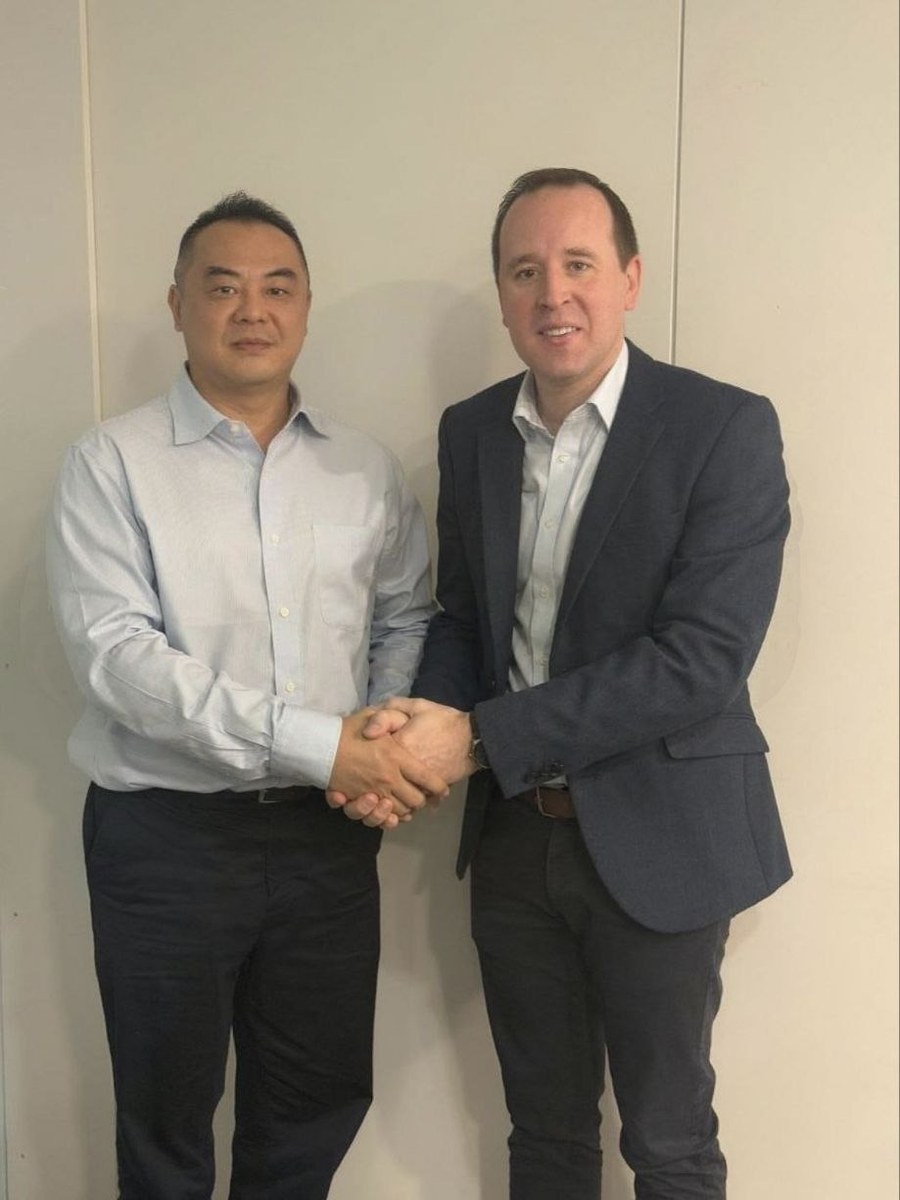
John Cummins TD
Minister of State for Local Government and Planning
Met the project team; the direction of the programme was agreed.
 China · Ireland · EU
China · Ireland · European Union
ELMSFLOW works with Chinese manufacturers and Irish partners to turn industrial opportunities in food and medical packaging, construction and cold storage into locally built, EU-compliant operations.
EU
Single-market access from one base
EN
English as an official and working language
12.5%
Corporate tax on trading income
3
Offices in Dublin, Brooklyn and Shanghai
ELMSFLOW LIMITED · elmsflo.com
We do not only move goods. We move the technology, the equipment and the people needed to make the product locally — and the compliance work that lets it be sold in Europe.
Process know-how, tooling and production parameters, quality control points, and commissioning support from the Chinese line to the Irish line.
Supplier selection by product family, factory acceptance and site acceptance testing, shipping, installation, commissioning and spare-parts planning.
Installation and commissioning engineers, line operators, quality and maintenance technicians, supervisors and trainers — with a plan to build the local team.
Standards route mapping, CE and British Standard documentation, ISO and BRCGS certification support, and company formation in Ireland.
Project areas
Printed food-contact packaging produced and converted inside the EU, close to the customer's filling line.
A separate workstream for regulated health supply chains, developed with specialist quality and validation input.
Compliant building products, off-site fabrication and the technical workforce to install and commission them.
Modular temperature-controlled capacity, built in phases as utilisation is proven.
Medical and pharmaceutical packaging is assessed separately as a later-phase opportunity and is not combined with food packaging.
Ireland combines EU membership, a common-law system and an open, export-oriented economy. For a Chinese manufacturer serving European customers, it is one of the few places where market access, language and investment infrastructure point in the same direction.
Goods produced in Ireland circulate within the single market without internal customs or tariff barriers, and carry EU origin.
Ireland is an EU member state where English is an official language and the everyday language of business, regulation and contract negotiation.
Ireland hosts the European headquarters and operations of many leading global technology and pharmaceutical companies, creating a concentrated customer, supplier and skills base.
A familiar legal and contractual environment for international project structures, joint ventures and supplier agreements.
12.5% on trading income for Irish-resident companies. The 15% global minimum tax applies to large groups under the OECD Pillar Two rules.
Sources: IDA Ireland, Revenue and Irish Government publications. Ireland and Malta are the two EU member states where English is an official language; Ireland uses English as its primary business language. Company references are public statistics, not project endorsements. Rates are summarised for orientation and remain subject to current rules and company-specific conditions.
Ireland's Minister of State for Local Government and Planning met the project team and the direction of the programme was agreed. Waterford City & County Council and Waterford Chamber of Commerce have engaged with the project at local level.
Minister of State for Local Government and Planning
Met the project team; the direction of the programme was agreed.
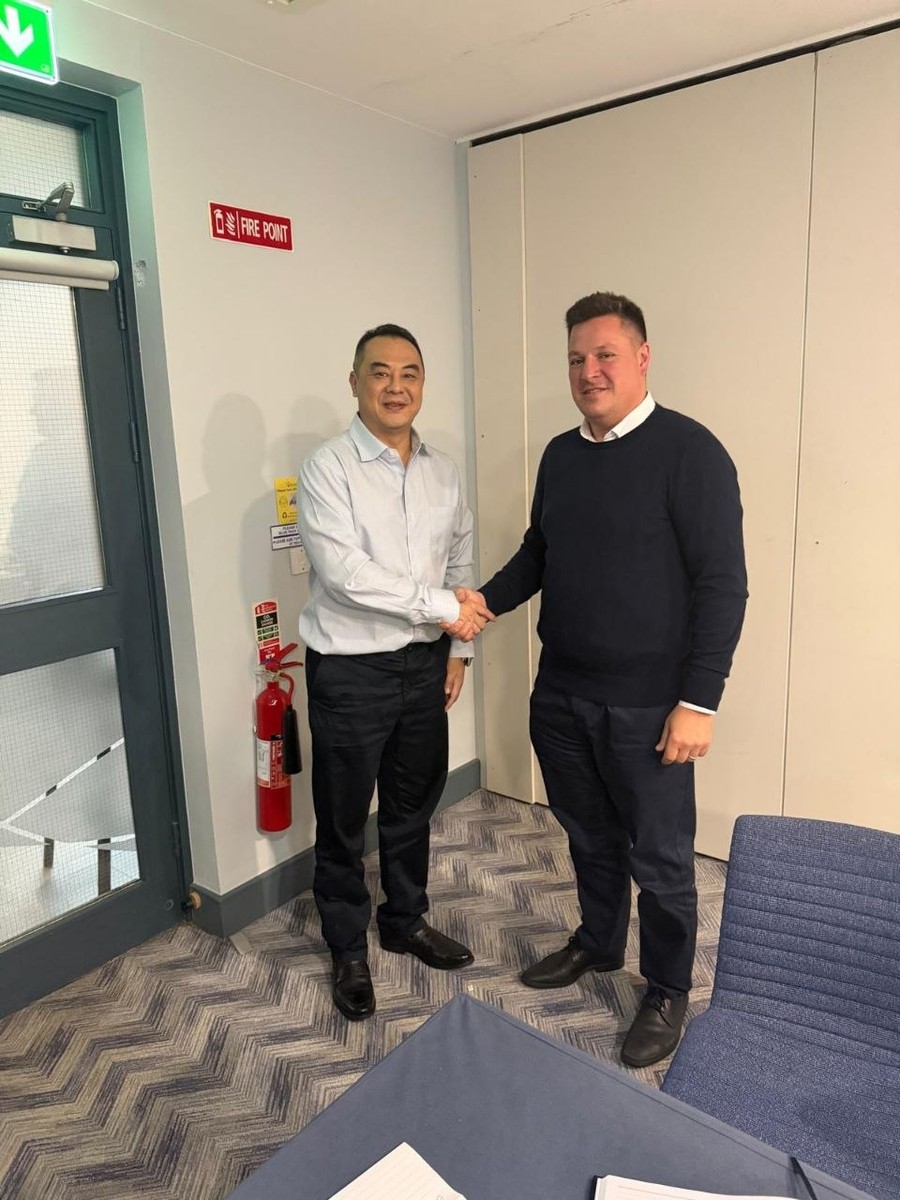
General Manager, Waterford City & County Council
Local-authority engagement on site, planning and delivery context.
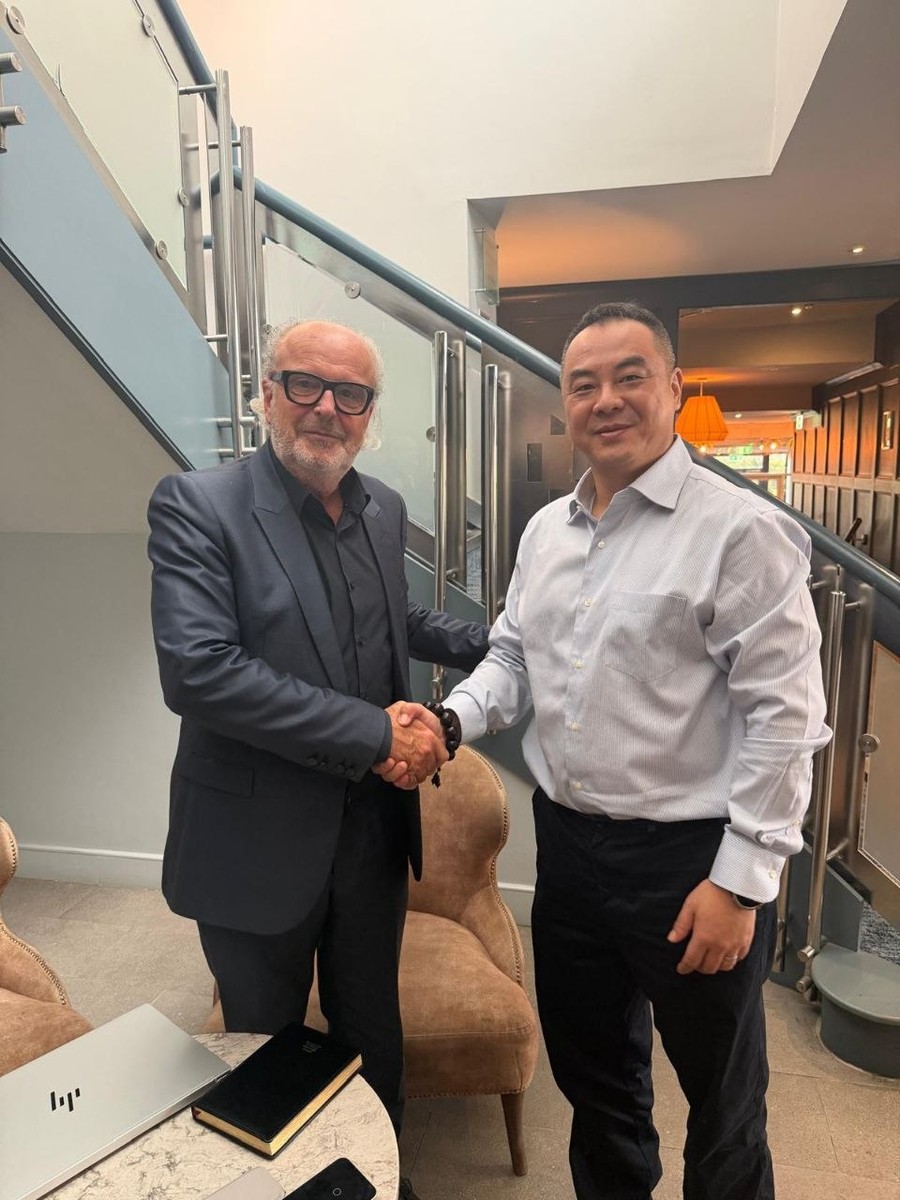
Chief Executive, Waterford Chamber
Chamber-level engagement and introductions to regional industry.
This page records engagement only. It does not represent a funding award, a grant approval, a planning consent or any certification.
Ireland competes actively for foreign direct investment. Support exists, but it is discretionary and project-specific: it must be applied for, and nothing is granted in advance.
The state agency that attracts and retains foreign direct investment in Ireland, a semi-state body under the Department of Enterprise, Tourism and Employment. It advises on site and property options, grants, R&D support and training, and connects investors with the wider system. Its remit covers inward investment only; Irish companies expanding abroad are served by Enterprise Ireland.
The National Standards Authority of Ireland. The route for standards interpretation, CE-related guidance and, for innovative or non-standard products, NSAI Agrément assessment against the Irish building regulations.
Large infrastructure can be structured with public participation. Any percentage, amount or timetable is project-specific, negotiated with the relevant agency, and cannot be assumed at the outset.
Planning permission, fire safety, environmental and wastewater consents are handled with the local authority and the prescribed bodies for that site.
IDA Ireland and NSAI are separate bodies with separate remits. Nothing on this page represents an approval, an award, an accreditation or a commitment by either agency.
Projects begin in Ireland and are built to extend. The group already operates from Ireland, China and the United States, with further offices in establishment, so a project can be supported from more than one direction.
Where we operate
Dublin, Ireland
Head officeEU entity · CRO 813399
Shanghai, China
China officeSourcing, supplier and workforce coordination
Brooklyn, USA
Registration in progressUS entity
London, United Kingdom
In establishmentUK market and Commonwealth routes
Brussels, Belgium
In establishmentHosts the EU institutions · policy and standards engagement
Market directions
Production inside the single market, with EU origin and no internal customs or tariff barriers.
English-language markets with closely linked trade, transport and standards frameworks.
Transatlantic routes, with a US entity in registration to support customers on that side.
Office status reflects the position at the time of publication. Registration and establishment steps are in progress and are not complete.
Importing finished product into the European Union is becoming slower, more expensive and harder to plan. Moving capability closer to the customer changes the economics of the whole chain.
The pressure
EU rules raise the cost of importing
Packaging, construction products and refrigeration equipment each carry their own conformity obligations. When goods arrive from outside the EU, the documentation, testing and market-surveillance burden lands on the importer.
Lead time and freight
Bulky, low-density goods such as packaging and panels are expensive to move. Freight volatility and route disruption extend delivery windows that production planners depend on.
Supply-chain instability
Long, single-source import chains are harder to protect against shipping risk and international disruption. Local capability gives a second source without a second risk.
Construction cost and inefficiency
Irish construction carries high cost and labour constraints. Off-site fabrication, prefabrication and modular methods are increasingly the practical way to hold a programme.
Cold-chain demand exceeds supply
Food, seafood, agriculture and pharmaceutical operators report that temperature-controlled capacity is not available when they need it, at the moment they need it.
What local build changes
Regulatory scope must be confirmed for each product family. Construction products: CPR (EU) 2024/3110. Packaging: EU packaging and packaging-waste rules and national producer-responsibility schemes. Refrigeration: EU fluorinated-gas and energy-efficiency rules. CBAM currently covers cement, steel, aluminium, fertiliser, electricity and hydrogen — not packaging as a product.
Ireland's labour market is close to full employment. Employers across construction, ICT, transport and care report persistent difficulty recruiting and retaining staff, and the employment-permit system exists to fill gaps that cannot be met domestically.
ESRI research published in November 2026 finds labour and skills shortages across both high- and low-skilled occupations in health and social care, construction, ICT and transport, and analyses Ireland's employment-permit system as the policy response.
Installation and commissioning engineers, production-line operators, quality and maintenance technicians, line supervisors and trainers, matched to the equipment being installed.
A short Chinese technical team for installation and commissioning; joint operation while local staff are trained; then a locally managed team with retained technical support.
Employment permits are the channel. The applicable category and salary threshold depend on the role, and must be confirmed position by position before any commitment is made.
ELMSFLOW does not grant permits or visas. Applications are made by the employer to the relevant Irish authority; this page describes a planning approach, not an entitlement.
Source: ESRI Research Series 243, Non-EEA migration to Ireland in times of labour and skills shortages, November 2026 — esri.ie/publications/non-eea-migration-to-ireland-in-times-of-labour-and-skills-shortages
Ireland's food and beverage sector is export-oriented and packaging-intensive, while a large share of its packaging is imported. Local print and conversion shortens the distance between the food producer and the pack.
The pressure
Freight on low-density goods
Finished packs are bulky and light: the freight and handling cost per unit is high, and sea times are long.
Tightening EU packaging rules
Packaging and producer-responsibility obligations are increasing, and the importer carries the evidence burden.
Slow response to change
Re-runs, artwork changes and seasonal volumes are hard to serve from a container-based import chain.
What local build changes
Print and convert inside the EU
Production sits next to the customer's filling line, inside the single market.
Less volume in transit
Flat and nested formats travel better; local stock removes the container minimum.
Compliance at source
Material, ink and migration evidence is produced where the packaging is made.
An existing sales network
Output does not start from zero: the project is developed with food wholesale and distribution partners who already sell into the Irish market.
What a project needs
Equipment matched to the pack
Printing, die-cutting and folding-gluing equipment selected against the actual formats and run sizes.
Process and colour control
Process parameters, artwork workflow, ink specification and colour management handed over with the line.
People
Commissioning engineers, operators and quality staff, plus training for the local team.
Medical and pharmaceutical packaging is run as a workstream separate from food packaging, because the quality-system, validation and legal-role obligations differ. The opportunity is in progress and is being developed with specialist quality and validation input.
The pressure
Different rules, different evidence
Medicinal-product and device packaging carries validation, controlled-environment and traceability obligations that food packaging does not.
Imported specialised capacity
Ireland's pharmaceutical and device base is strongly export-oriented, while much of its specialised packaging is sourced from outside the EU.
Long qualification cycles
Supplier qualification, change control and technical files take time; starting late costs a launch date.
What local build changes
Same island as the customer
Production and qualification sit in the same regulatory and logistics environment as the customer's site.
A shorter validation loop
Quality, regulatory and production teams can meet in person during qualification and change control.
Supply resilience
An EU-based second source reduces exposure to single-origin import chains.
What a project needs
Specialist capability
Cleanroom-compatible converting, validated processes and controlled documentation.
Quality systems
ISO 13485 and ISO 15378 scope as applicable, with validation protocols and batch traceability.
A defined legal role
The product owner and legal manufacturer lead scope; economic-operator roles must be agreed before work starts.
Status · in progress
Being developed, not yet qualified
Scope, product family and qualification route are still being developed with specialist input. No certification or qualification outcome is claimed.
Construction demand in Ireland is strong across housing, data centres, life-science facilities and port works, but the trades, materials and delivery capacity to serve it are not there. Two things can be brought in parallel: compliant materials, and the people to install them.
The pressure
Orders exceed delivery capacity
Contractors are reporting strong order books and not enough skilled trades, materials or delivery capacity to execute them.
Cost and pace
High build cost and long programmes make conventional on-site construction the constraint on the project.
Skilled trades
Persistent shortage of skilled trades is a documented constraint on delivery.
CE obligations
Construction products placed on the EU market need the applicable harmonised standard, factory production control, an EU notified body, a declaration of performance and an EEA authorised representative.
What local delivery changes
Off-site and modular
Fabrication away from site compresses the on-site programme and reduces weather and labour risk.
Technical workforce
Chinese technical crews for installation and commissioning, working alongside Irish trades.
Inspection before shipping
Pre-shipment inspection and dimensional checks before containers are sealed reduce rejection on arrival.
What a project needs
A product-family compliance pack
Harmonised-standard reference, factory production control audit, notified-body test reports, draft declaration of performance, EEA representative.
Local cross-testing
Independent laboratory testing against British and Irish standard baselines where the project requires it.
Crew and programme
Trades, crew size and installation plan matched to the site programme.
Note
Requirements are product-specific
Which route applies depends on the product family and its intended use. Engineering confirmation is required before any product is offered into a project or incorporated into a building.
Temperature-controlled capacity in Ireland is short while demand keeps growing across food, seafood, agriculture and pharmaceutical distribution. Modular construction allows a first facility to open quickly and expand as utilisation is proven.
The pressure
Demand exceeds capacity
Operators report that suitable frozen and chilled space cannot be found when it is needed.
Refrigerant and energy rules
Refrigeration equipment is subject to EU fluorinated-gas and energy-efficiency requirements, which affect equipment selection.
Build time and capital
Conventional cold-store programmes are long and capital-intensive before the first pallet moves.
What local build changes
Recognised in national planning
Cold-chain capacity is identified in Ireland's national infrastructure planning, with Waterford named as a port location for this kind of development. Support is discretionary and must be applied for.
Short route to operating capacity
Modular panels and packaged plant are assembled on site, far faster than a conventional build.
Phased investment
A first block can open at modest scale and additional rooms added as utilisation is proven.
Port and energy context
Waterford is a deep-water port with an offshore wind cluster in the region — relevant for energy-intensive refrigeration.
What a project needs
Refrigeration plant
Equipment and controls selected for compliance with EU refrigerant rules and for the temperature regimes required.
Envelope and fit-out
Insulated panels, doors, racking and handling equipment.
Operating model
Commissioning, maintenance and an operating plan, whether the facility is sold, leased or operated.
10,000 – 15,000 pallets
Demand signalled by a single national food distributor — on its own the size of the proposed first phase.
50,000 frozen + 20,000 chilled
Full-scale facility described in the project's technical paper, for the market as a whole.
≈ €102M
Construction cost estimate for the full-scale facility — planning reference, not a quotation.
Note
Site and energy first
Site suitability, grid connection and energy supply must be confirmed with the relevant parties. Capacity and cost figures above come from project planning discussions and remain planning references, not commitments.
Compliance is planned by product, by construction and equipment, and by site operations. Which route applies depends on product family, intended use and the individual project — and it should be settled before commercial or investment decisions.
Confirm the product, intended use, materials, destination market and customer specification before choosing a standard or a test.
The conformity chain for products that are permanently incorporated into a building or installed as plant.
The site and the operating system have their own obligations, separate from the product.
Eight checks we run with a supplier before shipping
This framework was developed from direct consultation with a senior technical officer at the National Standards Authority of Ireland and is a working project document. It is not an authorisation, an approval or a certificate from NSAI or any other body.
The same framework is available as a service to Chinese manufacturers selling into the EU and UK, whether or not they take part in an Irish project.
Service scope is agreed per client and per product. ELMSFLOW prepares, coordinates and documents; it does not replace a notified body, a testing laboratory, legal counsel or an engineering professional.
Six stages, each producing a document the client keeps. Nothing is assumed, and every open item stays visible until it is closed.
Define the product, the market, the intended use and the investment stage.
Capabilities matched to the product family, with information gaps recorded rather than filled in.
Technical, test, quality and product files checked against a project checklist.
Inspection scope, sampling and reporting agreed with an independent inspector, and pre-shipment inspection before container sealing.
Product and construction paths mapped in parallel, with open items and owners recorded.
Site, installation, commissioning, training and handover into operation.
Scope, counterparties and any external assessment remain subject to confirmation. ELMSFLOW coordinates and prepares; it does not replace a regulator, a notified body or a professional adviser.
Tell us the product, the intended market and the stage you are at. We will come back with the compliance route, the open items, and what a first phase would actually involve.
Introduce a product, a piece of equipment, a manufacturing capability or a technical team for project matching.
Describe the need, the target market, the intended use and the investment stage.
Discuss certification, inspection, logistics or local delivery collaboration with us.
Offices
Dublin — HQ
27/28 Fairview
Dublin D03 R8X
Ireland
Brooklyn
1329 Willoughby Ave
Brooklyn, NY 11237
USA
Shanghai
上海市浦东新区
祝桥2组226号楼
China
This document is a general introduction to ELMSFLOW's capabilities and to opportunities under assessment. It is not an offer, a commitment, a quotation, a regulatory approval or a certification. Nothing here represents an approval, an award or an endorsement by IDA Ireland, NSAI, any government body, or any partner. Product, site, permit, cost and schedule requirements must be confirmed for each individual project.